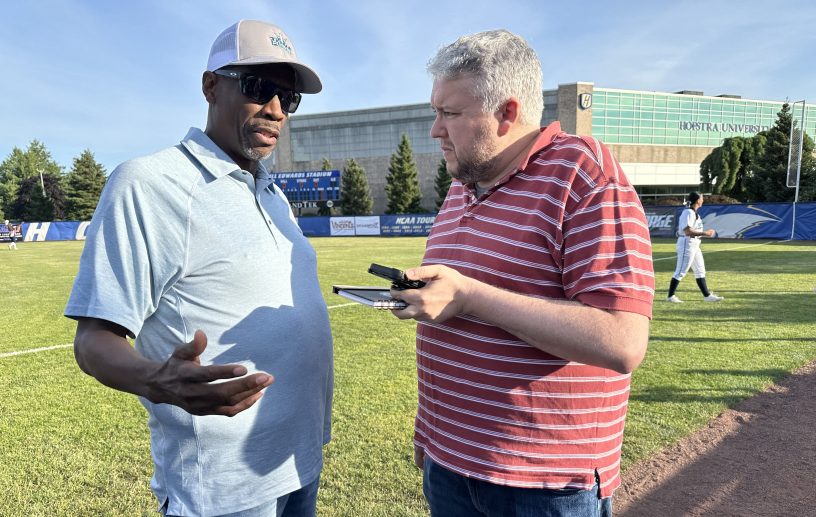
Freelance sports reporter Denis P. Gorman recently penned articles on Gotham FC soccer player Meredith Speck, Hofstra University’s plans to field swimming and diving teams next year, and Alonzo and Lorenzo Riddick, fraternal twins and Fordham University football players.
And in mid-September, he filed a preseason story on New York Knicks backup guard Tyler Kolek. As Gorman noted in his article introduction, the reigning NBA champion Knicks’ collective mindset “hasn’t changed.”
This quartet of articles highlights Gorman’s versatility as a journalist and the range of his storytelling skills.
There’s no shortage of sports events to cover in the New York metropolitan region, an endless array of potential scoops and a 24/7/365 competition among newspapers, radio stations, TV stations and websites, among others to capture people’s attention.
How does Gorman approach his work in this hyper-competitive market?
The 2002 graduate of St. John’s University in the Big Apple, whose articles have been published by more than 20 newspapers, as well as The Hockey News and The Associated Press, shared insights from his career in a recent interview conducted via email.
***
Growing up as a kid or perhaps as a young adult, what attracted you to the idea of becoming a sports reporter? Was there a momentous occasion that ignited the idea in your mind? Were there a series of events or an influential mentor in your youth who pointed you in this direction for a career path?
Well, when I was six, it was explained to me by a family member that I didn’t “have any athletic ability” and that I wasn’t “going to be able to make a living playing professional sports,” so I was going to need to “get a job to play the bills.”
When I became old enough to go to games and understand what was going on around me, I became enamored with the press box. It seemed like a magical place. Inside Madison Square Garden or Yankee Stadium or Shea Stadium or the Nassau Coliseum or the Meadowlands Arena or Giants Stadium there was an exclusive area where people were paid to watch and talk and write about the games. And I knew if I couldn’t play the game, I certainly could write about it.
Because I always loved writing. Still do. I always loved reading. Still do. I always loved talking about sports. Still do. I always loved thinking about sports. Still do. So the idea that I could write about sports for a living captured my imagination.
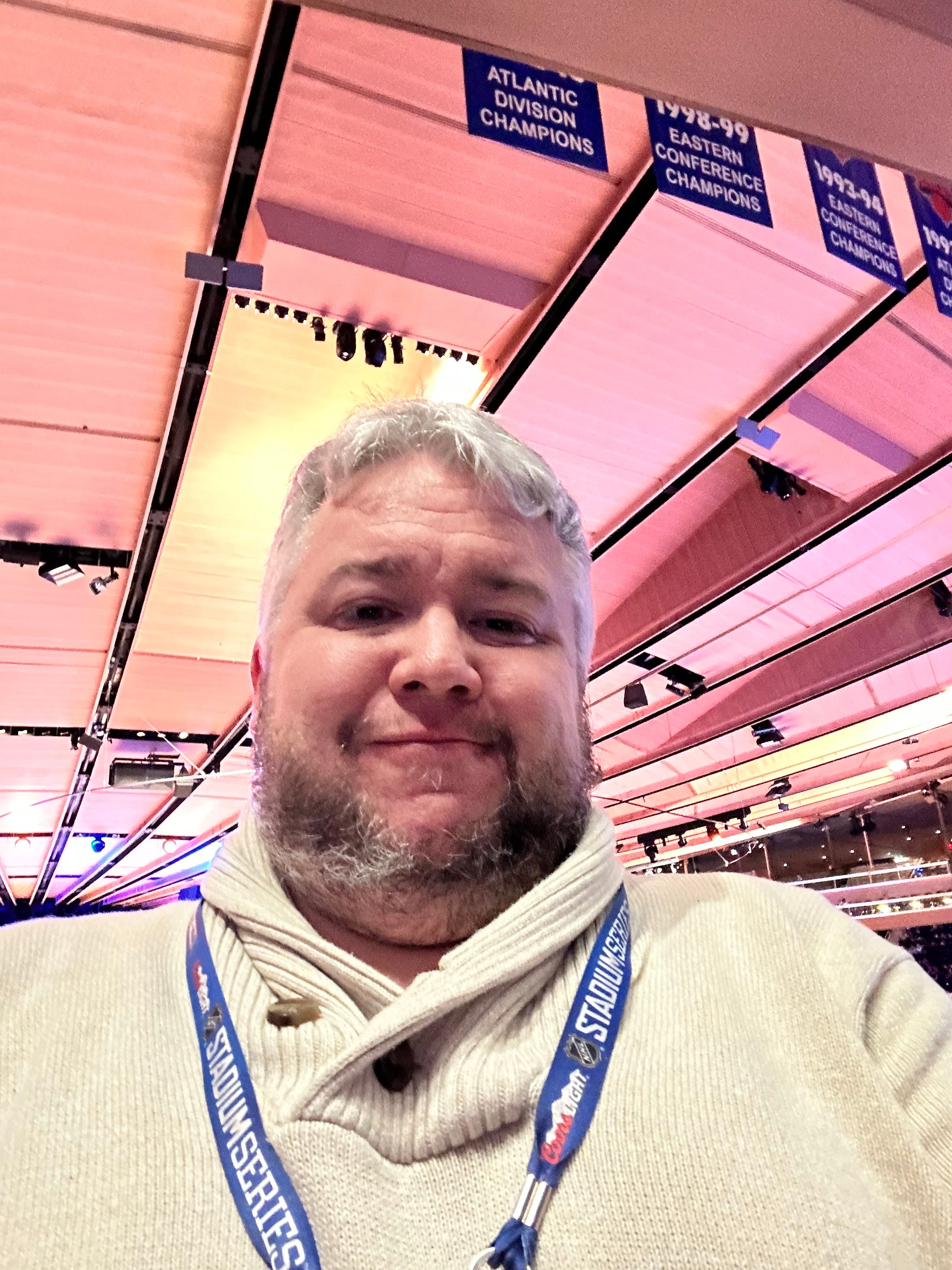
Looking back on your formative years as a college student and sports editor at the St. John’s University student newspaper, The Torch, what was/were the biggest career lesson(s) you learned about sports media? Can you offer a specific example of something that became a guiding principle in your career?
I think the most important lesson I learned was flexibility and work ethic and doing quality work. St. John’s is known as a basketball school, and when I started at The Torch I was low on the totem pole. So I would be assigned stories on the golf team and fencing team and soccer team and football team and baseball team. As I started writing stories on those teams, the editors would give me positive feedback and encouragement. Eventually they gave me opportunities to write about the basketball team and the chance to oversee the sports section.
When I was the sports editor, I had a conversation with another section editor who pointed out that while the basketball team had a lot of eyes on them, the athletes on the other teams worked just as hard as the members of the basketball team, and as such, they deserved the opportunity to be the back page-slash-centerpiece story.
For you, what are the biggest differences on the job (what you do and how you do it) during a so-called typical week in 2006 and 2026?
Social media is the biggest change. In 2006, Twitter didn’t exist. TikTok didn’t exist. Podcasts really weren’t a thing. In 2026, we are told to be active on social media, which includes using those platforms to break news.
In the past, if a reporter had an exclusive story, there really wasn’t a mechanism outside of publishing it in the newspaper or major sports news websites (ESPN or Yahoo! Sports) or broadcasting it on television or the radio.
What do you consider your chief strengths as a sportswriter? And can you give an example or two about how these traits have helped produce some of your most distinguished work?
I think my strengths are that I work hard. I try to ask smart, detailed questions. I really want to understand what a player or coach or executive is thinking and feeling. And if he or she will let me into their head, I believe that I have the ability and experience to share that with the public, which I think came through in this profile of then-New York Islanders rookie defenseman Matthew Schaefer for the Toronto Star (https://www.thestar.com/sports/nhl/how-matthew-schaefer-allowed-the-islanders-to-dream-big-again/article_6a2f9f37-271c-41cc-8ddb-6f652fdd924f.html).
In the hyper-competitive New York metropolitan media market, with media always around seeking exclusives and digging for news, how have developed a strong rapport with a number of key sources on the beat with various pro teams, at universities and at other sports organizations and leagues?
I think the way I have developed coaches and relationships with players and coaches and executives is by showing up at games and practices and being on conference and Zoom calls. I think if you show up and ask good questions and are prepared and treat people with respect, they will develop trust in you.
Among the current era of active sportswriters in North America, can you mention three of your absolute favorites? Above all, why do you consistently enjoy reading his or her articles?
My favorite sportswriters also happen to be friends of mine: Mike Vaccaro of the New York Post, Bruce Arthur of the Toronto Star, and then there is a four-way tie between Jeff Pearlman and Charlie Pierce of Esquire and Greg Wyshynski of ESPN and Adam Proteau of The Hockey News. All are terrific reporters and brilliant writers who paint pictures with words. So I spend a lot of time reading and admiring their work.
If aspiring sportswriters stumbled upon this interview, what would your advice be to them in an era marked by major layoffs and business closures?
I would advise them to be comfortable with video and audio. When I was growing up, the public got their news from newspapers or magazines or television or radio and, later, the internet. But social media didn’t really exist. Now with podcasts and short-and-long form video, the public has more options in how they digest news. So I think it is imperative that journalists are comfortable, willing, and able to use the technological tools that we have available to us today.
Thinking about your entire career, can you tell readers about a favorite one-on-one interview you had and what made it particularly special?
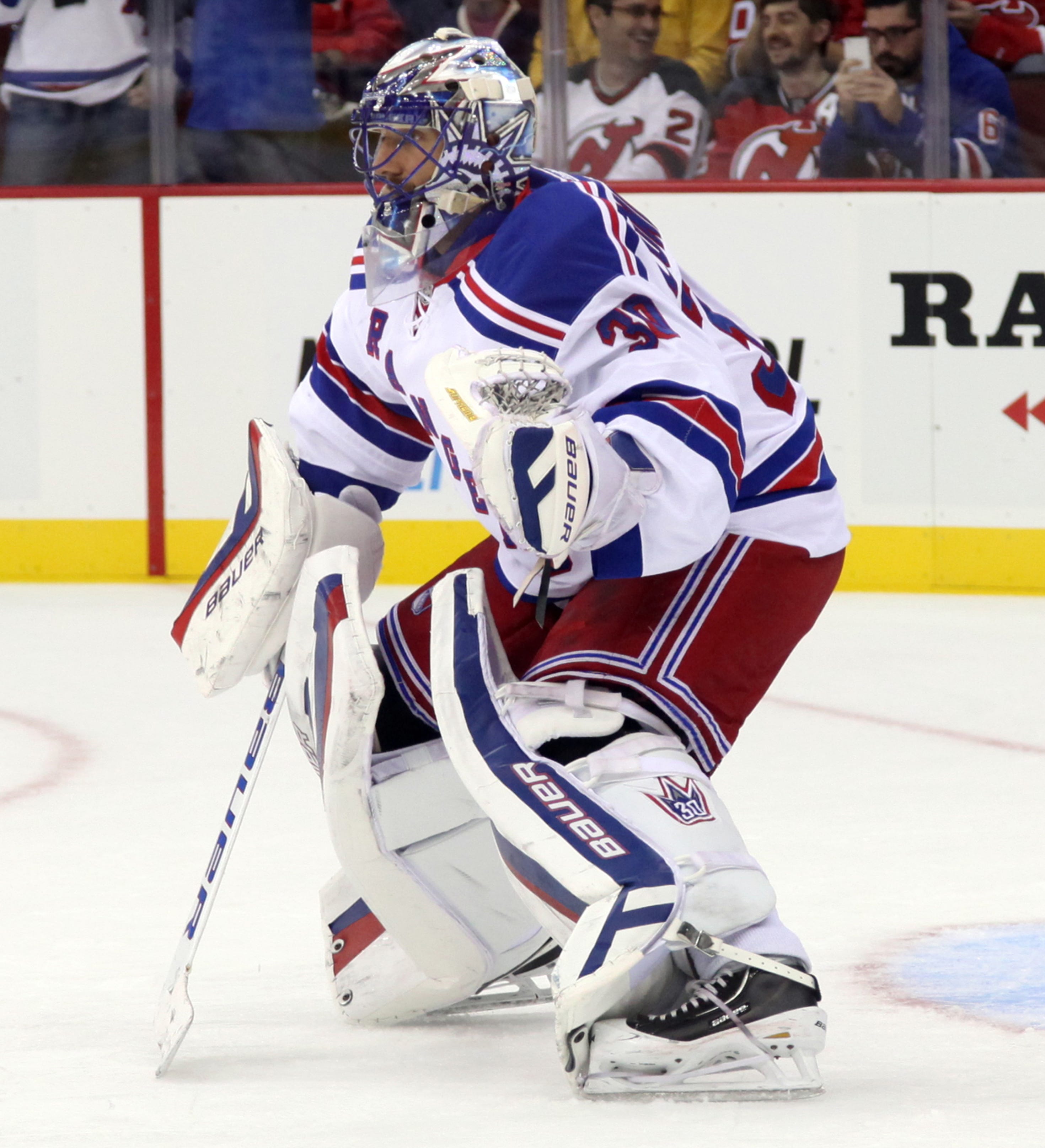
I had a one-on-one interview with Henrik Lundqvist at New York Rangers practice in March 2019. The Rangers were in the second year of a rebuild, and Lundqvist and I talked about the timeline for the organization to return to contention. Lundqvist was 36 and he had spent his entire career openly talking about his desire to bring the Rangers the fifth Stanley Cup in franchise history, but during our conversation he admitted that he was unsure how long it would take before the team would return to the playoffs (https://www.newsday.com/sports/hockey/rangers/henrik-lundqvist-stanley-cup-playoffs-e87228).
On a similar note, among the folks you’ve repeatedly interviewed over the years who are two or three at the top of the Denis Gorman All-Interviewee list? And how/why have they earned a spot in this exclusive fraternity?
My top three All-Interviewee list is (1): Henrik Lundqvist, (2) Anders Lee, and (3) Josh Bailey. When I talked to them I always felt as if I left with a better understanding of them as individuals, their teammates, their teams, the sports of hockey, and the ecosystem of a professional sports team. I always appreciate walking away from a conversation smarter than what I was when it began.
What’s the most unforgettable sporting event you’ve covered? Why?
The 2012 National Hockey League Eastern Conference Final between the New Jersey Devils and New York Rangers. This series marked the first time since the epochal 1994 Eastern Conference Final that the regional rivals met in the NHL’s Final Four. The Devils and Rangers were very good hockey teams that shared a mutual loathing. Which made for a terrific playoff series.
What’s your favorite sports movie?
“Slap Shot.” It is a top-five all-time sports movie, and arguably a top-20 comedy film.
What’s your favorite sports book?
“Losing The Edge: The Rise and Fall of the Stanley Cup Champion New York Rangers“ by Barry Meisel. Meisel was a sportswriter for the New York Daily News, and he chronicled the multi-year pathway the Rangers followed in order to win the franchise’s first Stanley Cup in 54 years and its fourth overall, only for the team to fall short the following season due to personal animosity, a labor fight, and shortened season.
Which story that you’ve written has generated the biggest feedback, positive or negative, from readers? What do you recall most about the reactions, the comments?
A few months after I graduated from St. John’s, I worked with Lenn Robbins and Jessie Graham to break a story for the New York Post about Grady Reynolds, a center on the basketball team, assault a female student (https://nypost.com/2002/11/30/st-johns-red-faced-university-let-reynolds-play-after-arrest/). Members of the school’s administration at the time, as well as fans and alumni, were viscerally angry because they felt I was disloyal to St. John’s. My reaction was that my loyalty is to (A) the public and (B) my employer at the time, and that I was not going to apologize for doing my job.
What do you consider the biggest compliment you’ve ever received from readers or media colleagues during your career?
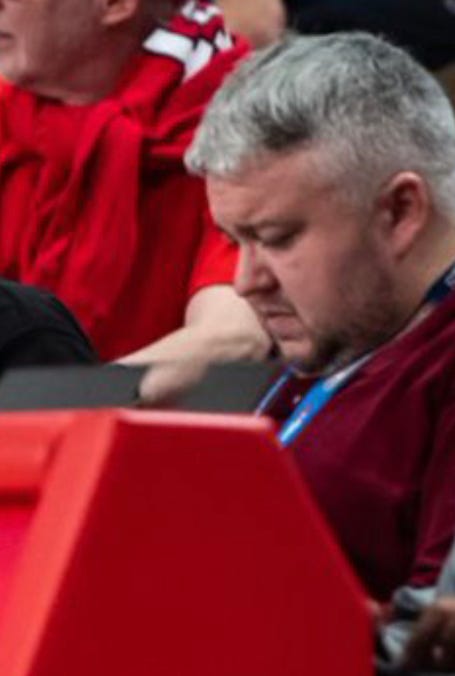
Recently a friend and colleague told me in a text conversation that they thought my writing and reporting continues to evolve and improve, and that was gratifying to read because I care deeply about my work product.
***
Follow Denis P. Gorman on X: https://x.com/DenisGorman

