This column was published on JAPAN Forward on April 24.
ODDS and EVENS | Compelling Boxing Stories are Featured in Jim Lampley’s Memoir
From the 1950s to the present, boxing has been an integral part of Lampley’s life as a sports fan and as an accomplished announcer.
By Ed Odeven
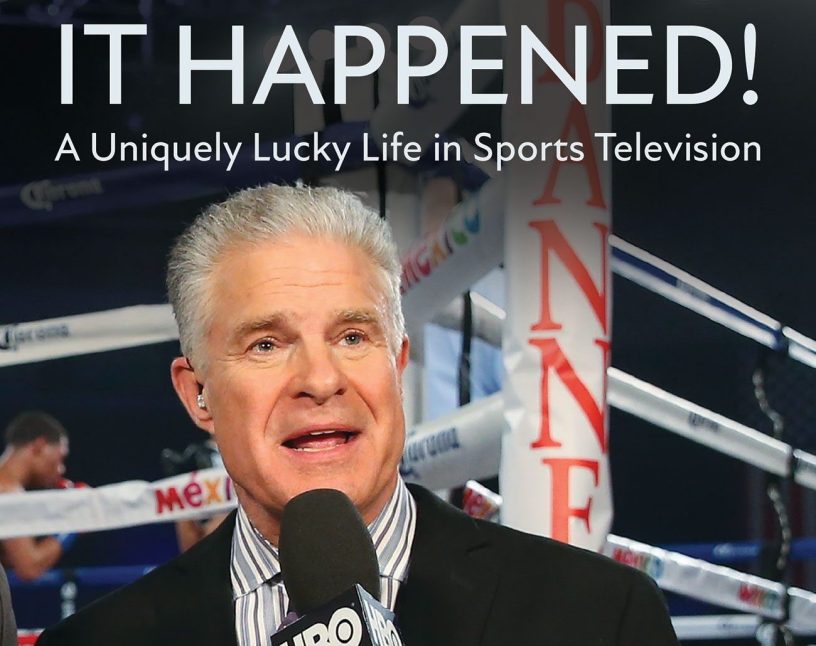
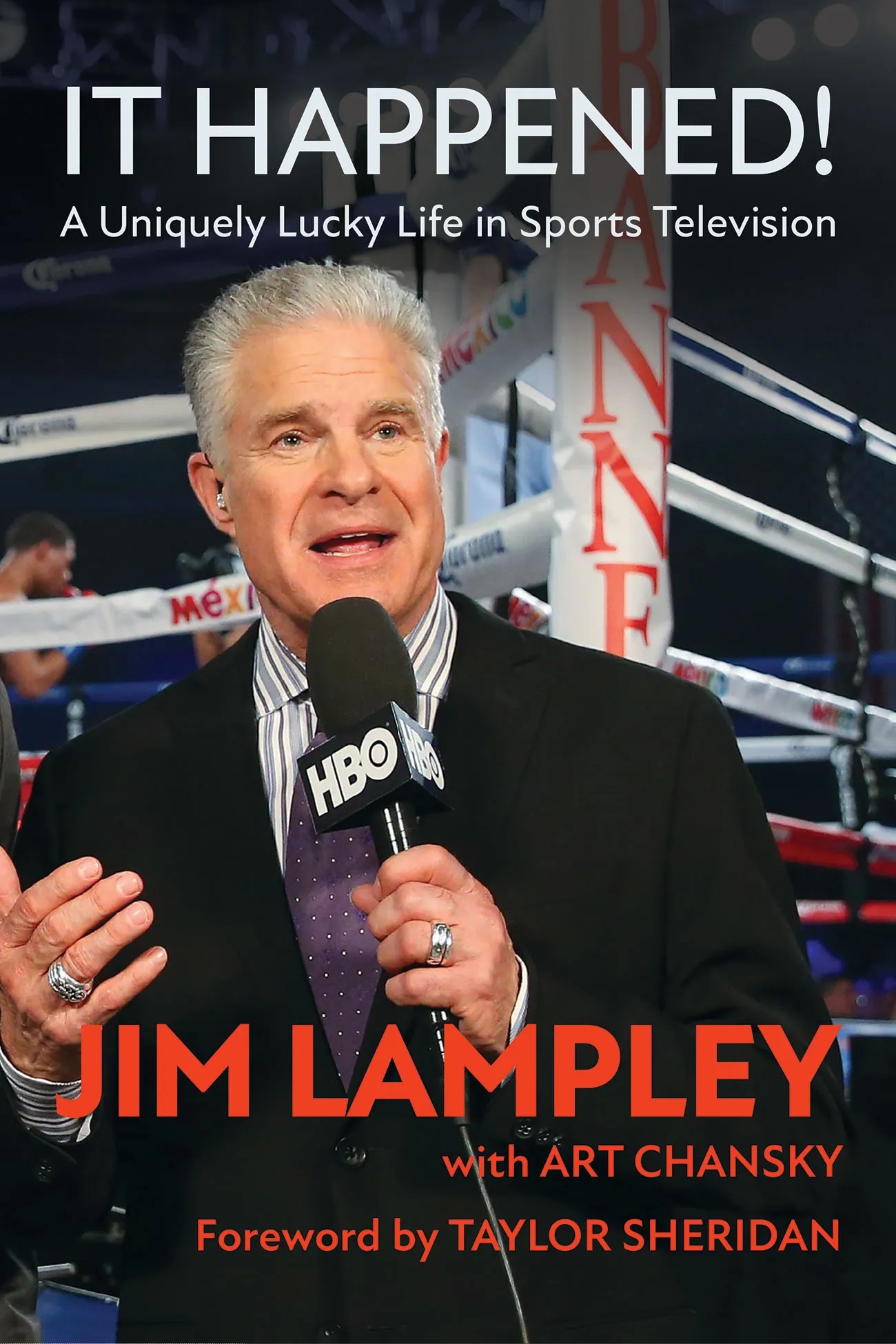
Boxing pulsates through Jim Lampley‘s memory. And abundant stories about the sweet science enrich his 2025 memoir, It Happened!: A Uniquely Lucky Life in Sports Television.
Setting the scene for his decades-long career as a sportscaster, which included working as the blow-by-blow announcer for the greatest upset in boxing history at Tokyo Dome in 1990, Lampley paints a vivid picture of his first recollections of a title fight.
It was December 1955. As a 6-year-old boy, he was instructed to pay attention to a pro boxing match for the first time. His widowed mother had taken him to a neighborhood party in North Carolina, but she had a special activity planned for her son that night.
Stepping away from the hubbub of the adults’ party in the same house, there was a TV in one of the bedrooms, and that was where Lampley’s mother took him.
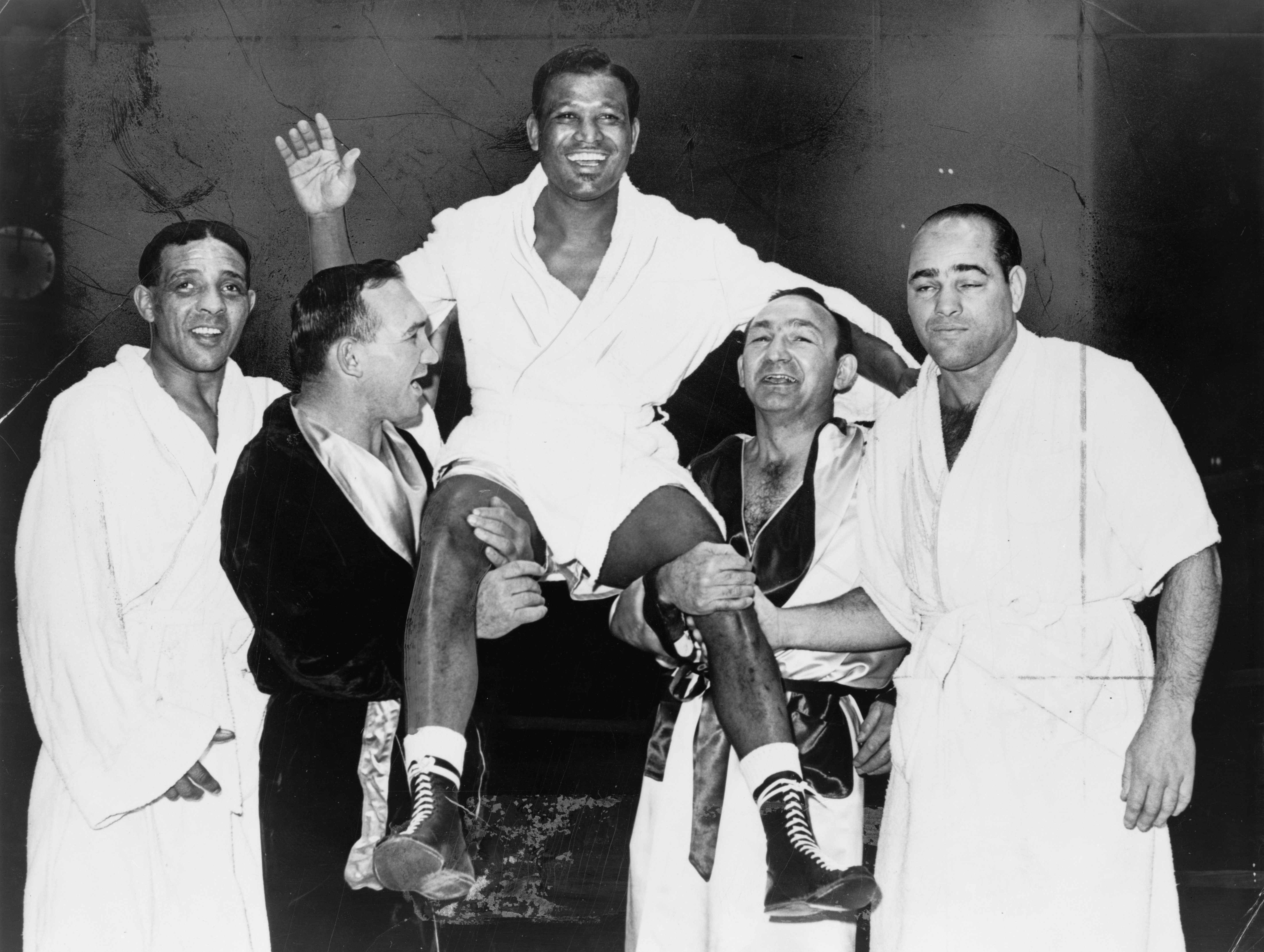
Thus began his introduction to Sugar Ray Robinson. Lampley’s mother explained why she wanted him to watch a live TV broadcast of Robinson’s middleweight championship bout against Bobo Olson at Chicago Stadium. It was broadcast on the Gillette Friday Night Fights.
“Sit here, and you are doing this because if your father were still alive this is exactly what you would be doing with him,” Lampley wrote, recalling his mother’s words, in his memoir. “…In the next hour or so a man named Don Dunphy is going to tell you a lot of what you need to know about boxing. And, by the way, Sugar Ray Robinson is my favorite fighter. I like the way he moves. He’s a dancer in the ring.”
Robinson, widely considered the greatest boxer ever, beat Olson via a second-round knockout.
Childhood Boxing Memories
Lampley’s introduction to Sugar Ray Robinson was one of the foundational pillars of chapter 2, helping establish his lifelong love of boxing.
In the next chapter, readers gain a sense of the future sportscaster’s upbringing and also the role his mother played as a moral compass for him.
“She made me a dedicated fan of most sports, and she made me fiercely anti-racist,” Lampley remembered. “It’s the second part I will never understand.”
He eloquently described how his baseball fandom was the polar opposite of his maternal grandfather, who rooted for the Washington Senators “because owner Calvin Griffith had staunchly declared he would never put a Negro player in a Senators uniform.”
Even at a young age, Lampley rejected this mindset. He became a rabid supporter of the San Francisco Giants. During his boyhood, their roster included African American stars such as Willie Mays and Willie McCovey, as well as Latino standouts, including Orlando Cepeda and Juan Marichal.
During the 1960 Rome Olympics, Lampley became aware of Cassius Clay (later known as Muhammad Ali). And he instantly started rooting for the American boxer, whose “gift for brash gab was otherworldly,” Lampley observed.
The future broadcaster became an obsessed fan. And after relocating to Miami, Florida, with his mother in the early 1960s, Lampley attempted to attend Clay’s training sessions in Miami Beach. He recalled that he visited the famed 5th Street Gym on two occasions.
Lampley met trainer Angelo Dundee twice, but Clay wasn’t there either time.

Attending the 1st Liston-Clay Fight
The disappointment of not meeting the Olympic boxing gold medalist was replaced by a thrilling experience. In February 1964, Lampley’s mother bought him a ticket to attend the Sonny Liston-Cassius Clay heavyweight title fight in Miami Beach.
For the 14-year-old fan, this was a momentous occasion.
“Mom drove me to the convention center and dropped me off, saying she would track the fight via radio or maybe in a bar and come back to a designated spot near one side of the arena whenever it was over,” Lampley wrote in his memoir. “Given Liston’s history, it was understood that might be a matter of just a few minutes. Logic dictated that the longer the event lasted, the more it might favor the younger, taller, faster, more athletic Clay.”
The fight also gave him a close-up view of the level of animosity directed at Clay.
“I was shocked at the preponderance of boos when Clay entered [the ring],” Lampley wrote. “How could all these people be so ardently opposed to someone whose ideas were so right, who had won an Olympic gold medal for America, who was fighting against a visibly sinister ex-con? It didn’t make sense to me.”
Sitting at Miami Beach Convention Center, Lampley witnessed the future global icon later known as Muhammad Ali earn a shocking seventh-round technical knockout.
Excitement in Miami Beach
For the future broadcaster, what was the experience like in the stands before Liston was vanquished?
“My heart was beating with a level of excitement I’m sure I had never felt,” Lamply recalled.
He added, “My [older] seatmate was kind and considerate, and he urged me not to get my hopes up, and to understand that Clay was very young and had been rushed into this.”
Despite his youthfulness, just weeks after turning 22nd, Clay was the better fighter on this night.
The sixth round catapulted Clay from title challenger to the brink of his first world title ― and defying overwhelming odds.
“Clay was circling elusively but stepping forward and landing sharp combinations,” Lampley remembered. “Now Liston really DID look old, a message portrayed by a countenance of discouragement on his face. I was celebrating enough to visibly annoy some of the others sitting around me, but the ‘elderly’ stranger who had now become my friend was smiling and laughing as if to say, Go right ahead.
“When Cassius stepped out into the ring for round seven, Liston just stayed on his stool. It seemed unreal, and there were many around me who were expressing disbelief. But my seatmate said, ‘Go ahead and celebrate, kid. You’ve got what you wanted. Your boy is now the heavyweight champion of the world. He did what almost none of us thought he could do. Go find your mother and have a big night. And tomorrow you can begin telling your neighbors you were right all along.’ “
Continue reading the full column on JAPAN Forward.

